I’ve seen it happen more times than I can count; software go-lives get treated like the finish line. Teams count down to it, celebrate it, and then assume the Manufacturing Execution System (MES) will take it from there. It won’t. And it was never supposed to.
An MES is a record and an enabler. And a really good one at that. It captures what’s happening on your floor with a precision that paper travelers and spreadsheets simply can’t match. But it doesn’t tell you what to improve next. That decision, and the discipline to act on it consistently, belongs to Lean and Operational Excellence (OpEx) teams.
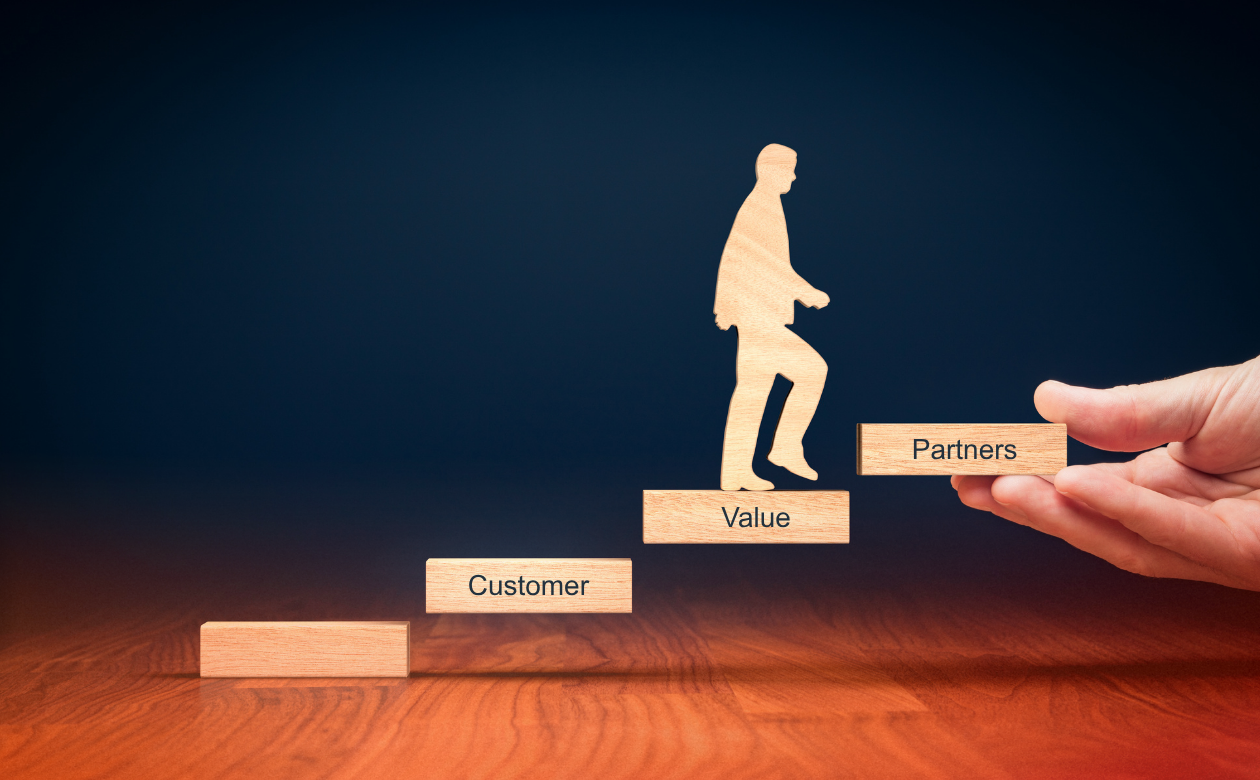
I tell every customer the same thing: the system is the sidekick. Continuous improvement is the hero. Value shows up when your organization takes what the MES reveals and drives real change on the floor — not the moment the software passes UAT. And the sidekick has a second job that matters just as much: once Lean finds the better way, the MES is what keeps the floor from drifting back to the old one.
When a transformation project starts (and at regular intervals), successful teams repeat the mantra, “This will not be perfect. It will be acceptable on Day 1, and we have structured ourselves and our feedback loops to make it better.” An MES system can record what you did, but only continuous improvement tools will help you see how to do it better. The giant leap you should expect at go-live is in data availability and standardization. Bringing that stability to the story of “what is”, helps your continuous improvement teams measure “what can be”. Whether you call them Lean leaders, Operational Excellence (OpEx), Industrial Engineering, or Continuous Improvement – the mission is the same, and it’s not plausible without data.
Manufacturing Data Only Matters if Someone Acts on It.
Throughput, quality, traceability, cost — all of it will tell you where performance is going. But data sitting in a dashboard is just noise. It only earns its keep the moment your OpEx or Lean team uses it to find a bottleneck, drive down WIP, or pull the line closer to the actual heartbeat of customer demand. When there is stability in the data and control of the process, waste is much more discoverable.
No configuration effort in the world can predict every condition your floor will produce. Teams who attempt to reach perfect coverage are the ones that never go live. Daily use exposes the exceptions. A well-fed, well-used MES shows your team exactly where operations are falling short of what the customer actually needs. That’s the starting point for improvement, and that’s Lean work, not software work.
When a Workaround Shows Up, Don’t Panic. Listen to It.
Here’s something I’ve learned: left alone, workarounds calcify into that phrase, “This is the way we’ve always done it”. Duplicate entry and off-system decisions become normal and we throw bodies at the problem, rather than putting our minds to define the problem we need to solve. It’s impossible to make a commitment to improvement when processes are fragmented across the MES, spreadsheets, and personal trackers. Every time our “gut” and the spreadsheet named after some really smart person gets it wrong, your leadership loses confidence that anyone is seeing the current state. Finding the gap is the easy part. Clearly defining its cause and closing it requires a named owner and a Lean method, as well as enough humility to ask for help and consider there might be a better way.
WHAT you make is what makes your company special and competitive in the sector. HOW you flow work across the shop floor is not. Let us help you try a new way of working, and you might find the breakthrough you need with minimal effort.
Why We Built the Customer Value Partner and Lean Operations Consultant Model.
I didn’t want value realization to depend on whoever happened to still be in the room after go-live. That’s a fragile system, and we’ve all seen what happens when it breaks.
Every iBase-t account has a named Customer Value Partner — a CVP — who owns the Value Realization Framework for the life of the relationship. The CVP translates the commitments made at point of sale into an Adoption Plan that captures your goals, and defines what “good” looks like at every horizon. That partner stays with you after the project close-out is complete, and invests our knowledge and insights back into the relationship. We partner with you as the industry changes your priority, and architect the next plateau for your team to grow and stabilize operations. A CVP carries no sales quota. Their role is to be your sherpa to the next level, whether it’s interacting with our services team, Customer Care, your innovations need to become our next product breakthrough, or you’re looking to expand your engagement with iBase-t. Their job is adoption and value, full stop.
But a CVP can’t do that work alone across your many sites and countries of operation. That’s why we created the Lean Operations Consultant role (LOC). These are manufacturing operations experts first, not software experts. They walk the floor, run Gemba walks and Kaizen events, apply Value Stream Mapping and rebuild standard work where the current process isn’t holding. Their real job is organizational change management: getting a new workflow genuinely adopted by the people who didn’t ask for it to change. That’s hard work, and it requires someone who speaks the language of the shop, not the language of a software implementation.
The two roles are designed to feed each other. Findings from the floor go straight into your Adoption Plan, so every improvement ties back to a committed KPI instead of a general sense that things are better. Neither role solves this from a spreadsheet. Both solve it from the floor, and I built the operating model that way on purpose.
Ownership Can’t Expire at Go-live. Leadership Must Keep Value in View.
One of my first “serious” jobs was as a technical writer and corporate trainer. There is a universal truth that I have found through many iterations of the same transformation problem. You can make the most elegant, sophisticated software in the world, but it’s worthless if nobody uses it.
Post go-live adoption is the most critical of the four touchpoints in our engagement model. A project may have the best of intentions, but if we are continuously partnering as ‘service provider and customer’, you’re not going extract all of the value you could be from each license dollar. I’ve heard iBase-t customers laud our product team’s responsiveness. Again and again we prove that A&D manufacturing requires a specialization in understanding the extreme iteration of engineering change, the sophistication of the product, the expense and lead time constraints that means “just scrap it” is not an option, and the incredible people that make it all hang together. Add to that the new trend we are seeing where incredible executives who drive strategy are not staying in the same role for 3-5 years, but being surged to the next organizational problem, and you have a continuity of purpose concern. How do you deliver with focus, when it’s re-invented?
Our Customer Value Partner team is there to help you hold the north star, while being responsive to change. A robust governance structure of Monthly Operating Reviews (MORs) and Quarterly Business Reviews (QBRs) at different levels of the organization allow leaders to drive the next evolution of strategy, and stability in the tactics of the day to day.
Follow a Roadmap on Your Shop Floor, Not a Punch List.
The Adoption Plan should start with your strategic goals, drive into the site where our story begins, and find its rhythm in the first cell to go live. My team does not want to meet the promises that were made to you when you bought Solumina licenses. Our mission is to blow those commitments out of the water, with value that you didn’t even know was possible.
This is not an art. We have built our own culture, rooted in continuous improvement, where we learn from you and from one another. We integrate with our customer, and iterate through our standard work to unlock more than you asked for. We seek to deliver what you didn’t even know you needed.
Put simply, Lean Operations Consultant look for and find specific problems in production. It may be an approval that takes too long, an entry an operator makes twice or a workaround that has genuinely outlived its excuse. Small, measured changes make the cause and effect visible. The key is to prove the change on one line before you scale it across a site. When you scale that learning, we make you the hero of your organization’s story. That’s Lean discipline applied to a digital environment. And it’s the only way I’ve actually seen value realization hold. The sequence changes as production changes, but the discipline doesn’t.
Solumina is What Makes the Gain Stick.
A Kaizen event can produce a real, meaningful improvement — and lose it within six months if the new standard work lives in a binder or a training slide instead of the tool operators use every single shift. People revert to habit under schedule pressure, or when the tool doesn’t have process drift controls. The gain disappears quietly, and no one can point to the day it happened.
This is where Solumina does the heavy lifting. Once an LOC validates a new standard work method, your process planners configure it directly into Solumina — so the improved process is the one the operator has to follow to move a work order forward, not a document they’re asked to remember. The old workaround stops being an option, not just a bad habit.
And in an AS9100D environment, that matters in another way too. “We improved something last year” is not evidence. A configuration change tied to a specific standard work revision, with the resulting KPIs tracked in the CVP’s VRF is actual evidence.
Lean finds the opportunity. Solumina locks it in. And our teams enjoy the rush of a process improved with permanence, and then we do it again.
Questions to ask about the Effectivity of Your MES
The question I’d encourage every operations and IT leader ask isn’t “is the MES working?” Ask if your organization is getting better at using it. I’d assign someone to be accountable for that feedback loop every quarter, not just in the weeks around go-live.
- Does your Operational Excellence team have access to iBase-t Solumina experts?
- Does your Solumina support team have a Solution Architect that they can call from iBase-t to make sure that a change is sustainable?
Treat go-live as the starting line for Lean-driven continuous improvement, with named ownership and a framework to track it, and the MES will keep earning its investment for years. Treat it as the finish line, and the system fossilizes into an expensive record of what used to work.
The software isn’t the hero of this story. But it’s not a bystander either. It’s the trusted companion that gives your Lean and OpEx teams the evidence they need to find the next improvement — and the system that holds each gain in place once they do. Build the ownership model around that truth, and the value keeps compounding long after the project team has moved on.